12 tips for your perfect petticoat look
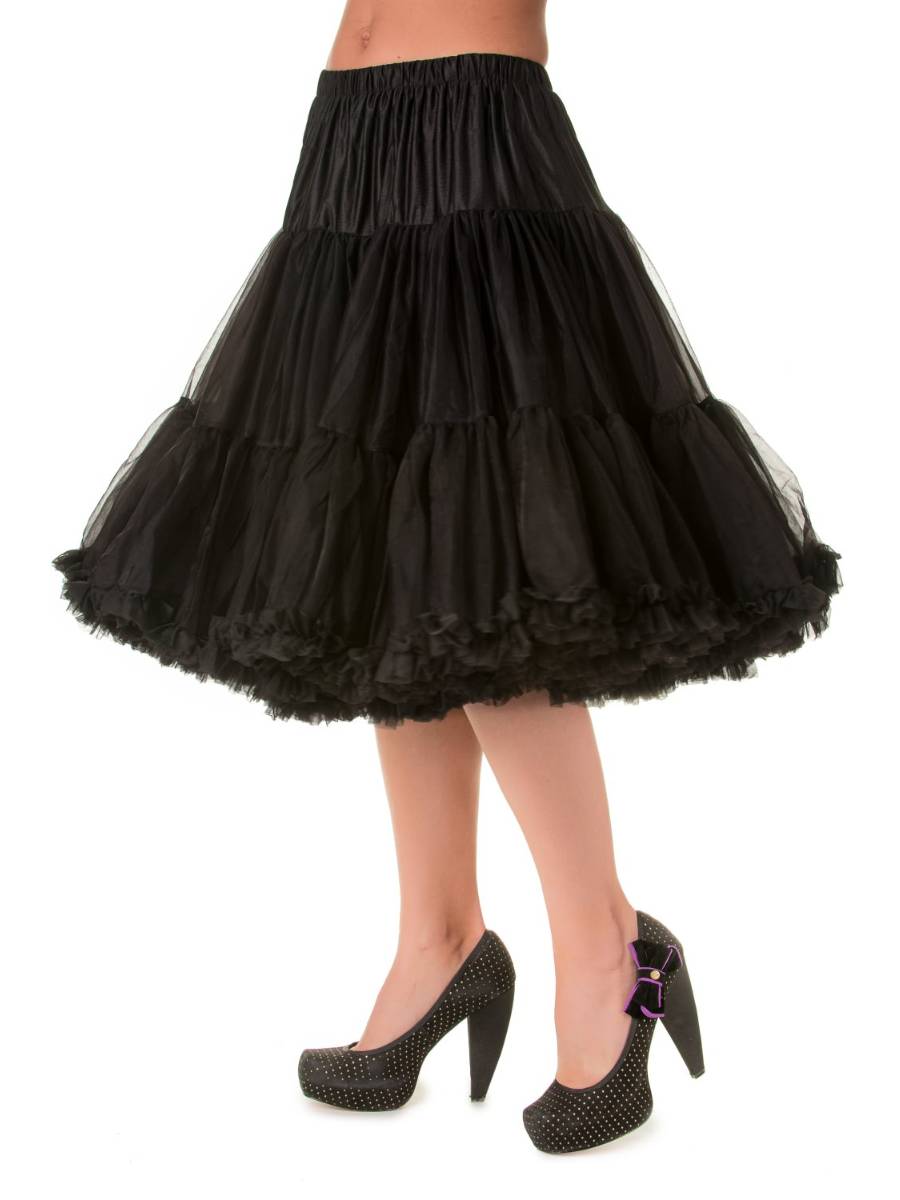
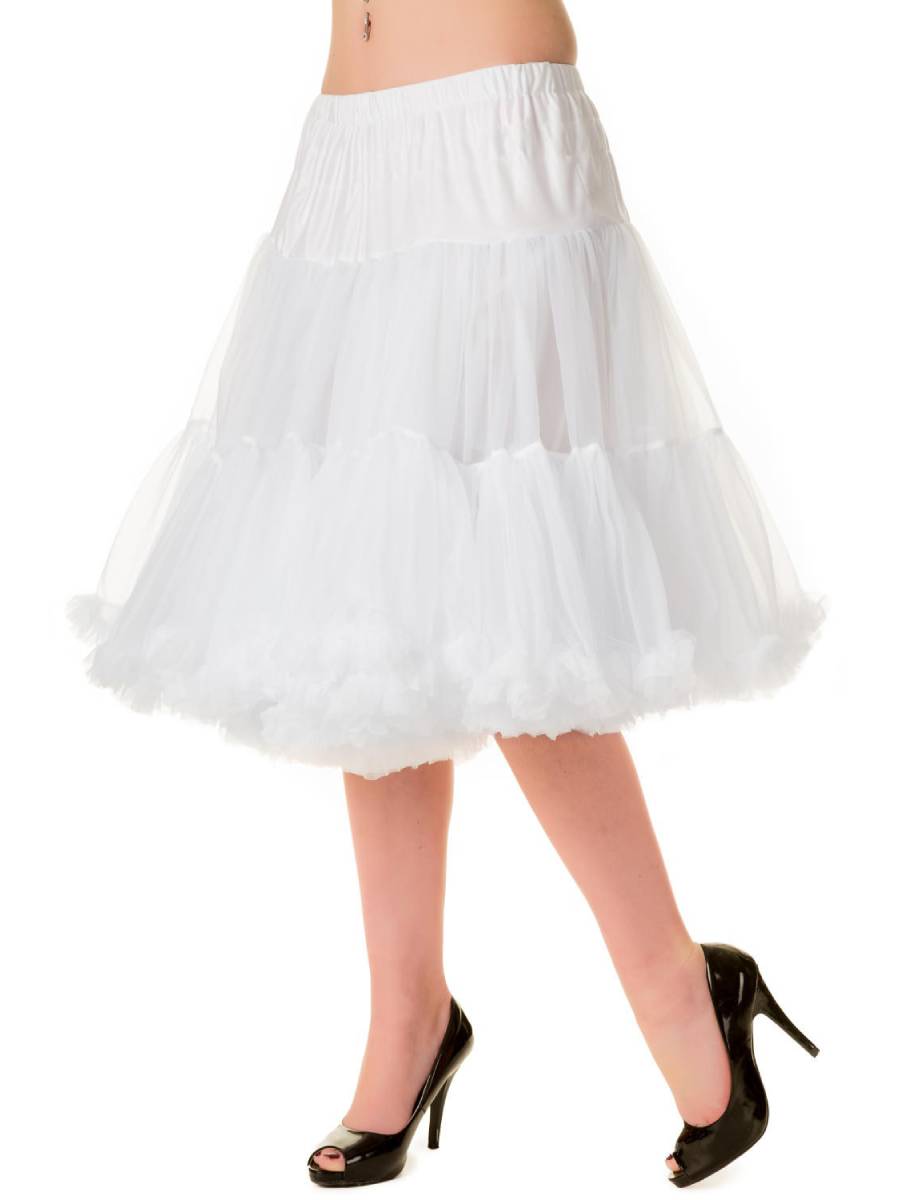
When you think of 1950s fashion, an elegant swing dress with a full, flowing skirt usually comes to mind straight away. Although 1950s fashion featured many different styles – from feminine pencil dresses to glamorous evening gowns – to this day, the petticoat is one of the most important accessories for an authentic 1950s look. It gives your outfit that typical voluminous 1950s silhouette and playful retro charm. In this blog post, you’ll find out everything you need to know about petticoats – from choosing the right one to practical tips for the perfect fit.
1. Which petticoat goes with my dress or skirt?
- Which dresses and skirts are actually suitable for wearing a petticoat underneath?
The skirt must be full enough for the petticoat to unfold underneath and move as you walk. A petticoat that’s too voluminous under a skirt that isn’t flared enough won’t be able to unfold properly – it will take on a stiff shape that looks as though you’re wearing a lampshade … Circle skirts and 1950s-style swing dresses with full skirts are perfect. Petticoats will generally not work with pleated or ruffled skirts. If you want to find out whether a skirt is suitable for petticoats, lay it out on a flat surface. If the shape of the skirt is only a narrow triangle, it is probably not suitable for a petticoat. For dresses and skirts from our shop, we provide tips on suitable petticoats directly on the product page. If you’re unsure whether a skirt from your wardrobe is suitable, please feel free to send us an email with a photo of your skirt, we're happy to help. - How long should the petticoat be?
The petticoat should be the same length as the skirt (please measure the skirt length from the bottom edge of the waistband). If the petticoat is too short, the skirt will fold over at the petticoat hem, creating an unattractive, sharp edge. Most of our petticoats come in standard lengths: 20 inches (50.8 cm) = knee-length, 23 inches (58 cm) = just below the knee, 26 inches (66 cm) = calf-length. We do not stock floor-length (bridal) petticoats or mini-length tutus. - Is the petticoat meant to peek out from under the skirt?
In the 1950s, this question alone would have made the older generation cringe in horror. After all, a petticoat was underwear, and of course that wasn’t meant to be seen! For a truly authentic 1950s look, choose your petticoat so that it aligns with the hem of the skirt. For a modern rockabilly style, you can let the bottom ruffle of the petticoat peek out underneath your skirt. As a vintage fan, I personally don’t like it when several inches of petticoat hang out from under the skirt, or when a petticoat is worn on its own without a skirt at all - but if it fits your (modern) esthetic, just do as you please. - How much volume should the petticoat have?
The volume depends on the shape of the skirt and the fabric your dress or skirt is made of. For skirts that are only slightly flared, we recommend petticoats with less volume; if you have a heavy, full skirt, you’ll need a more voluminous petticoat for it to have any effect at all. When buying a petticoat, keep in mind that, at first glance, the petticoat will look much fuller without a skirt over it than it does later on underneath the skirt. We recommend always trying on a petticoat with a skirt or dress. - Which colour should I choose?
It’s entirely up to you! Personally, I love a bit of contrast between the petticoat and the skirt (for example, I wouldn't wear a black petticoat under a black skirt). With thin dress fabrics or light-coloured skirts, bear in mind that a coloured petticoat may show through the fabric. For those new to petticoats, I recommend basic white and black, they go with (almost) any outfit. - One layer or more? How many fabric layers are necessary?
There’s no right or wrong answer here; as long as it suits the skirt (see volume), it’s up to you. Bear in mind, however, that a very light, single-layer petticoat worn under a dress made of heavy fabric may have little effect and simply look like a plain underskirt. - I’m very short – should I wear a shorter petticoat?
I think it’s a modern myth that petite women always have to wear short skirts. The original dresses of the 1950s were always knee-length or even calf-length, and that’s exactly how they were worn by women of all sizes. Tip: You can adjust the length of our best-selling Banned petticoats by pulling the elastic through one of the lower fabric tunnels. If you’d like to have a skirt taken in, please bring your petticoat with you to the fitting with your tailor – otherwise, in a worst-case scenario, the petticoat may no longer match the skirt.
2. How do I find the right size?
- Do petticoats stretch at the waist?
Yes, our petticoats have a stretchy elasticated waistband. We recommend choosing the same size as your usual dress size; however, the double sizes XL–XXL also fit our plus-size customers up to 6XL. - How tight should the waistband be?
It’s important that the petticoat sits at your natural waist (above your hip bones). Please don’t pull the petticoat down so low that it hangs on your hips, as it will then slip down when you walk or dance. The petticoat should sit comfortably at your waist. Generally speaking, 1950s fashion emphasises the natural waist, which may feel a bit unusual at first if you’ve only ever worn modern clothing before. If the petticoat is a little too loose, our Banned petticoats can be taken in using the buttons in the elasticated waistband (you may be familiar with this from children’s clothing).
3. Can I even wear a petticoat with my figure/at my age?
- Of course! A well-fitting petticoat is incredibly flattering because it emphasises your natural waist (i.e. your slimmest point) and creates the classic 1950s hourglass silhouette.
- Won’t it make me look too wide?
Just the opposite! In the shop, we often hear our customers say, ‘Oh my, I do have a waist!’ when they are trying on their first petticoat. Just make sure to wear the petticoat at your natural waist to emphasise the Fifties silhouette. - Isn’t that just for young girls?
It's true that in the 1950s, mainly young women wore petticoats – for them, it was a sign of rebellion, just like the listening to rock ’n’ roll. Older women wore petticoats on festive occasions, for example under cocktail dresses. Nowadays, we don’t need to worry about that – a lovely swing dress with a petticoat will suit women of all ages and body shapes!
4. When can I wear a petticoat?
- Is a petticoat comfortable for everyday wear?
Experienced petticoat wearers would say: Of course! A petticoat isn’t a hoop skirt or 19th century crinoline – it moves with you, so you’ll eventually forget you’re wearing one... But of course, a light, single-layer petticoat is more suitable for everyday wear than a very voluminous or stiff one. - Is it suitable for the office or just in my free time?
We have many customers who wear light petticoats under their skirts at work. Personally, I’d recommend wearing voluminous, large petticoats in your free time and on festive occasions. - Does it look too flashy?
Once again: it’s entirely down to your personal taste! If you fancy wearing a petticoat in everyday life, go ahead and enjoy being a 50s style icon! - What are typical occasions for wearing a petticoat?
As a fan of the Fifties, I’d naturally say: whenever you like! But of course there are occasions when our customers particularly love to show off their petticoats. These include festivals and retro events, classic car shows, concerts and dance events, but also weddings … where not only the bride, but also female guests love to wear elegant dresses with petticoats. They are a great choice for 1950s-themed events and fancy dress parties too.
5. Can I wear a petticoat in summer?
- Will it be too warm underneath?
Not if your petticoat has enough room to expand beneath the skirt and moves with you as you walk. Festivals and retro events often take place in summer, and many ladies wear petticoats there. - Are there any lightweight styles?
Of course – petticoats come in many different styles and materials. Single-layer petticoats are lighter in weight.
6. What materials are available?
- Polyester tulle - our favourite
Our customers love the soft polyester petticoats. With just one layer or the classic multi-layered style, they are comfortable to wear, easy to care for and don’t scratch. - Chiffon
A stiff fabric mainly used for large petticoats, such as square dance or show petticoats. Chiffon holds its shape very well and is particularly suitable if you want the petticoat with maximum volume. Downside: it is slightly more delicate than polyester tulle and a bit less comfortable to wear. We are currently looking for a supplier of chiffon petticoats and would be grateful for any tips. - Net tulle
Netting was often used for petticoats in the 1980s; it is very sturdy and has a characteristic mesh structure. Advantage: It is inexpensive, retains its shape well and provides plenty of volume with just a few layers. Disadvantage: It is scratchy and can ruin fine stockings; it also does not cope well with frequent washing. Nowadays, this type of tulle is mainly used for fancy dress or stage costumes. We do not stock stiff tulle petticoats because we are not happy with their quality. - Cotton
In the 1950s, this was the classic choice for homemade petticoats, which were then starched or stiffened with sugar water. Today, we have an easier way to get the desired volume with multi-layered, soft petticoats. In our Frankfurt store, we stock handmade cotton petticoats; however, these are more suitable for everyday wear and for lighter skirts.
7. How can I stop the petticoat from scratching or pricking?
- Do I need an underskirt?
Since a petticoat is an underskirt, you don’t need to wear an additional underskirt underneath it. Many of our petticoats have an opaque material at the top, which makes them especially comfortable to wear. - Which styles are most comfortable to wear?
Depending on the occasion, we recommend petticoats made from polyester tulle or cotton.
8. How do I style a petticoat?
- What type of shoe should I wear?
Take your inspiration from the style icons of the 1950s: elegant pumps or strappy sandals like Grace Kelly, ballerina flats or wedges like Brigitte Bardot or Audrey Hepburn – you will find suitable shoes for every heel height. For a modern rockabilly look or for dancing, simple trainers or canvas shoes will work. Avoid clunky shoes such as hiking sandals or modern "ugly trainers". - Which tops or jackets are suitable?
Make sure your top is either cropped or tucked into the skirt. This really shows off your lovely 1950s waist to its best advantage. Jackets should also be cropped to the waist or flared with a peplum to preserve the silhouette of the petticoat. In summer, bolero jackets go very well with this style; in winter, flared 1950s style coats will keep you warm and your look authentic. - Which accessories complete the look?
Petticoat styles are as varied as the women who wear them. Here, too, the rule is: let yourself be inspired! By style icons from the 1950s, vintage fashion influencers or by petticoat-wearing ladies you meet – what could be better than chatting about fashion! If you want to emphasise your 1950s waist in true vintage style, we recommend Fifties-inspired stretch belts, with a bow or metal buckle.
9. How do I care for my petticoat?
- Can I wash a petticoat in my washing machine?
You can wash our popular polyester petticoats on a gentle wool or delicate cycle – just pop the petticoat into a pillowcase or a large laundry bag to prevent it from getting caught in the drum. - How can I make sure the petticoat keeps its volume?
Please do not use fabric softener and hang the petticoat up to dry immediately after washing. - How do I store my petticoat?
Our petticoats can be squashed down to a very small size for storage or when travelling, without losing their volume. There are special ‘petticoat bags’ available, but a gym bag or pillowcase will do just as well. If you won’t be using your petticoat for a while, you can store it in a vacuum bag with all the air removed to save space.
10. How do I prevent static electricity?
- What can I do about tulle sticking to my skirt?
It's not possible to prevent static electricity entirely, as the weather and humidity play a part. Normally, however, this rarely happens, especially with a dress or skirt made of natural fibres and a soft petticoat. As for tights, it’s said that spraying the backs of your knees with hairspray helps – though I haven’t tried this hack myself.
11. Which brands offer good quality?
- Is an expensive petticoat worth it?
It always depends on how often and for how long you intend to wear your petticoat. Our most popular petticoats start at around 50 EUR, depending on the length, and offer good value for money. You should only invest in a particularly expensive petticoat (e.g. a square dance petticoat costing several hundred euros) if you really do wear it very often. - What's the difference between a cheaper petticoat and a more expensive one?
The most important factor is the material. A petticoat made from cheap netting will probably not last very long. Furthermore, the length and number of layers determine the price; petticoats from smaller brands or handmade styles are more expensive than those from larger international retro fashion manufacturers. At Peggy Sue Vintage, you’ll find only petticoats that have been selected to match our high quality standards.
12. How do I move or sit when wearing a petticoat?
- Is there anything I need to keep in mind when sitting or dancing?
It always depends on volume and material. You’ll hardly notice a light petticoat in everyday life. With larger, soft petticoats, you may need to be a little careful when sitting down, as you’ll have more fabric below your waist than usual – but as I said above, a petticoat isn’t a stiff hoop skirt! If you dance acrobatic rock ’n’ roll (or head to the coast on a windy day), pretty frilled knickers (known as ‘pettipants’) will prevent any unwanted glimpses. However, a regular pair of cycling shorts or shapewear knickers will also do the trick.
Would you like to know more?
If you need advice, we're happy to assist you by phone +49 6990437223, via e-mail or (just like it used to be in the Fifties) in person in our Frankfurt store